Stellar Development Foundation Joins Blockchain Payments Consortium

Stellar Becomes Founding Member of Blockchain Payments Consortium
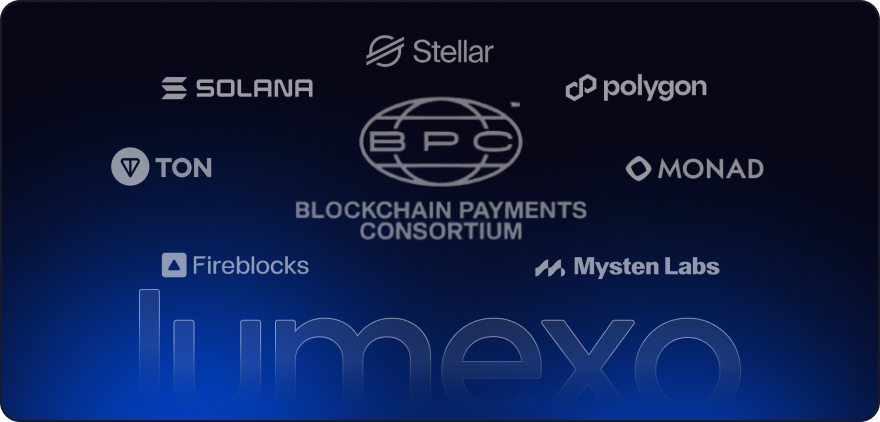
The Stellar Development Foundation (SDF) has joined the Blockchain Payments Consortium (BPC) as a founding member, alongside Fireblocks, Polygon Labs, Mysten Labs, the Monad Foundation, the Solana Foundation, and the TON Foundation. Announced on November 6, 2025, this alliance unites seven leading blockchain infrastructure providers to tackle fragmentation in global payments. As global on-chain payment volume surpassed $15 trillion in 2024, exceeding Visa and Mastercard combined, blockchain rails are reshaping finance. Yet, inconsistent standards hinder seamless cross-network flows. BPC aims to fix that. It defines common frameworks for compliance, interoperability, and trust. For users, this means faster, safer remittances and business payouts across borders.
The Mission: Building a Unified Payments Framework
Moreover, BPC’s mission is clear: Create safe, shared standards for better payment experiences. Blockchain payments are fast and low-cost. But they lack the data and compliance layers traditional finance demands. BPC bridges this gap. It enables institutions to build systems that work across chains and jurisdictions. Specifically, it supports regulated stablecoins like USDC on Stellar. It ensures seamless integration with legacy rails. As Raja Chakravorti, SDF’s Chief Business Officer, stated, “Stellar has facilitated billions in payments, proving blockchain’s efficiency. BPC’s focus on open standards aligns with our vision of accessible infrastructure for all.” Additionally, it fosters collaboration between regulators, fintechs, and networks. Thus, compliance becomes consistent. Adoption accelerates.
Stellar’s Role: Proven Scale Meets Interoperability
Furthermore, Stellar brings real-world proof to the table. The network has processed billions in cross-border volume. It settles in 5 seconds for $0.00001. Partnerships like MoneyGram (400,000+ locations) and Yellow Card (20+ African countries) show impact. For example, UNHCR’s Aid Assist delivered $4.6M to 2,500 Ukrainian families via Stellar USDC. Now, BPC standards enhance this. They enable hybrid flows with Solana, TON, or Polygon assets. As a result, RWAs like BENJI ($849M) or tokenized Treasuries ($505.8M) move freely. Developers gain tools for compliant dApps. For users in LatAm or Asia, where $450B in remittances flow yearly, fees drop. Access rises.
The Bigger Impact: From Fragmentation to Frictionless Finance
In addition, BPC addresses a core barrier: Siloed networks. Stablecoins settle more value than cards. But institutions hesitate without unified rules. BPC changes that. It acts as a bridge. Financial giants join. Regulators engage. As the announcement notes, “We lay the foundation for blockchain payments to operate globally: fast, trusted, interoperable.” For $XLM holders, demand grows. More volume means fees in Lumens. XLM held steady at $0.34 post-news. For everyday users, it’s practical: Send digital dollars. Receive local cash. Instantly. Platforms like Lumexo simplify $XLM trades. Low fees apply.
The Future: A Connected, Inclusive Payments Ecosystem
In short, SDF’s BPC role isn’t symbolic. It’s foundational. Seven networks unite. Standards emerge. Blockchain payments mature. As Q4 2025 pilots launch, watch adoption soar. The future isn’t fragmented. It’s frictionless. Stellar helps build it.